If the bank says the property failed verification, do not immediately apply to five more lenders.
First find out which stage failed and what document, title, approval, valuation or policy issue caused the decision. A missing copy may be recoverable. An ownership gap or unauthorised construction may require a very different decision.
Key takeaways
>
– Confirm whether the bank rejected you, the property or only the requested loan amount. – Ask for the practical reason and pending document in writing. – Pause additional token, registration or seller payment while the issue is unclear. – Use an independent property lawyer for title questions. – Another lender’s approval does not repair a genuine property problem.
This is a moment to diagnose, not to prove the bank wrong.
What to do in the first 24 hours
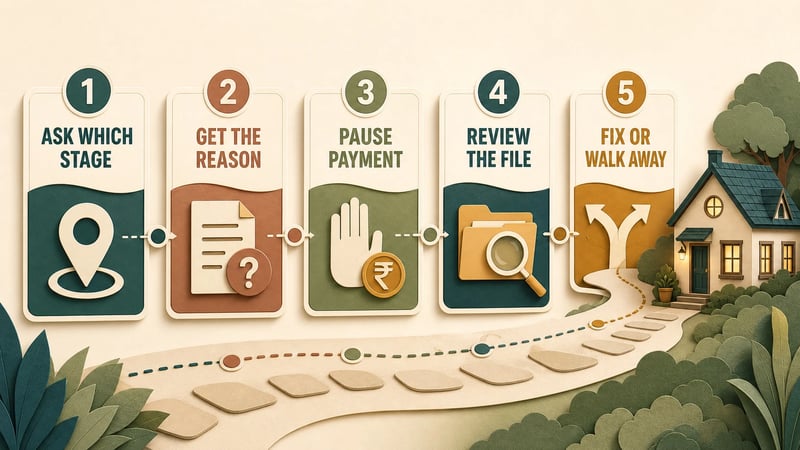
Use this order.
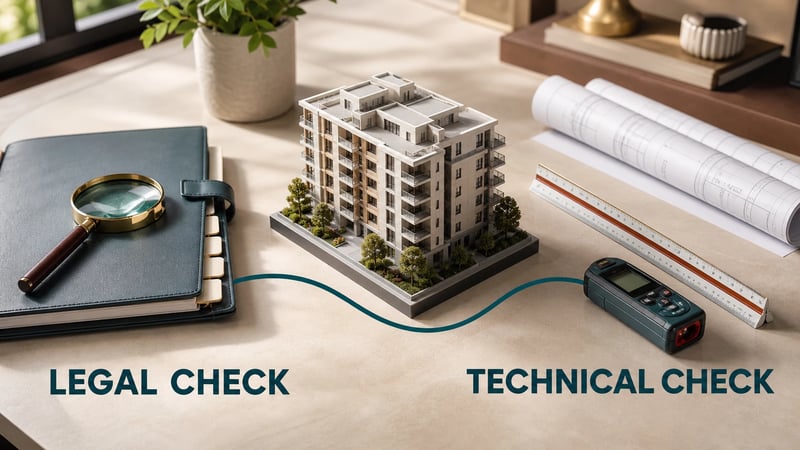
- Ask which stage produced the problem: credit, legal, technical, valuation or policy.
- Request the reason and exact pending item in writing.
- Save the sanction letter, application receipt and all lender communication.
- Pause any avoidable payment to the seller.
- Re-read the agreement’s document, loan and refund clauses with your lawyer.
- Ask the seller for the complete property file.
- Get an independent qualified local property lawyer to review the issue.
Do not let the seller or broker reduce the message to “this bank is strict” before you understand the finding.
Was the borrower rejected or the property rejected?
These are different problems.
| Result | Possible reason family | Main next step |
|---|---|---|
| Borrower credit rejected | Income, obligations, credit history, policy | Review borrower eligibility and lender communication |
| Property legal failed | Title, ownership, encumbrance, authority, documents | Examine the property file and legal query |
| Property technical failed | Plan, construction, area, condition, property type | Examine inspection and approval issue |
| Valuation lower | Lender recognised a lower value | Recalculate loan and cash requirement |
| Disbursement held | Open condition, original document, own contribution | Complete or challenge the specific condition |
You can estimate the borrower side with Paisaseed’s loan-eligibility calculator. It cannot tell you whether the lender will accept the property.
Why can a property fail legal verification?
The title chain is incomplete
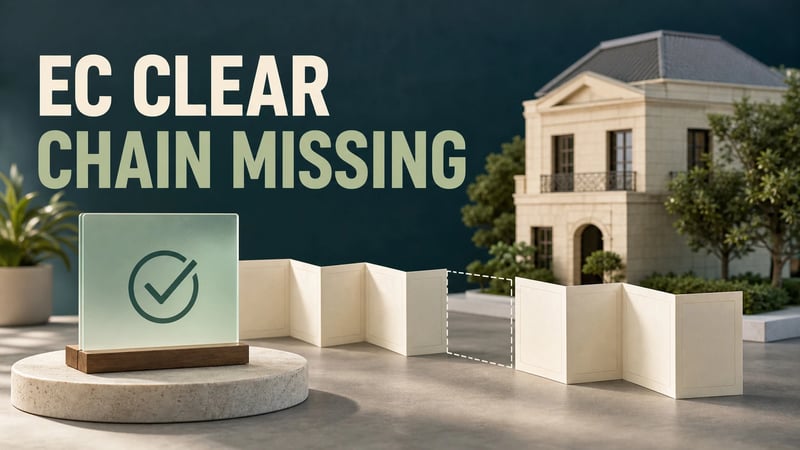
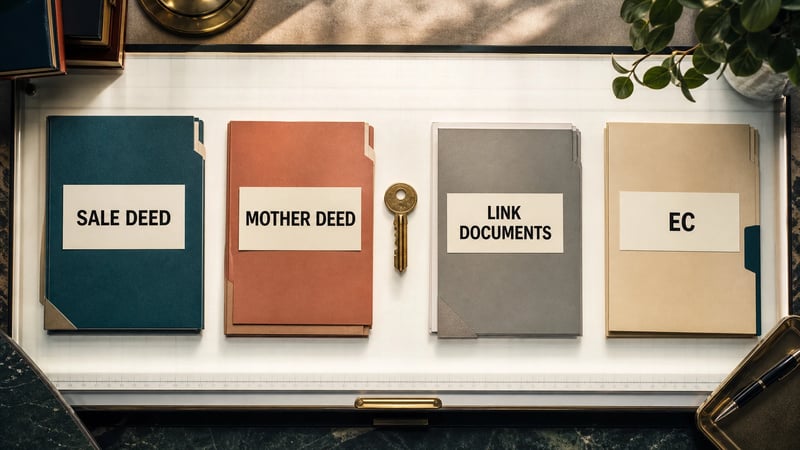
The latest sale deed may refer to earlier ownership documents that are missing. The lender may ask for originals, certified copies or a fuller title trail.
One owner, heir or authorised party is missing
The seller may not be the only person whose rights or signature matter. The file can raise questions about co-owners, heirs, partition, gift, release or power of attorney.
Names or property details do not match
Differences can appear in:
- owner names and initials
- survey or subdivision number
- plot, house or flat number
- area and boundaries
- undivided share of land
- authority or society records
Some differences can be explained or corrected. Others can change the identity or extent of the property.
An earlier mortgage or charge remains unresolved
The EC or title file may show a mortgage without a corresponding release. The seller’s original documents may still be held by a lender.
Required title or authority documents are unavailable
An allotment, conveyance, development agreement, approved plan or transfer permission may be missing for that property type.
The document appears damaged or unsuitable for verification
A lender can raise concerns when title papers are unreadable, altered, incomplete, laminated in a way that affects examination or otherwise difficult to authenticate.
Do not try to improve or recreate the document. Ask the registration authority about official copies and let the lawyer handle the evidence question.
Why can a property fail technical verification?
The technical team may find:
- construction does not match the sanctioned plan reviewed
- area or unit identity is unclear
- unauthorised additions are visible
- the building or layout lacks an applicable approval
- construction is incomplete for the requested disbursement
- property condition or access affects lending policy
- the property type is outside the lender’s policy
Technical rejection does not always mean the title is defective. It means the physical, planning, valuation or policy assessment did not clear.
Ask which observation caused the result.
Why can valuation reduce or stop the loan?
Your agreed price and the lender’s recognised value can differ.
Suppose the purchase price is Rs 90 lakh, but the lender recognises Rs 75 lakh. The lender may calculate the permitted loan on the lower value and its loan-to-value policy.
If you cannot fund the larger gap, the transaction may no longer work even though the bank has not declared the title defective.
Use the home-loan EMI calculator to recalculate repayment, but also recalculate:
- down payment
- registration and transaction costs
- valuation gap
- legal and technical fees
- repairs and moving costs
- emergency cash left after purchase
Do not borrow the gap casually through an expensive unsecured loan without understanding the household risk.
Sanction received, then property rejected: how is that possible?
A sanction can be conditional.
The lender may approve your borrower profile and proposed amount subject to:
- property legal clearance
- technical inspection
- valuation
- original-document deposit
- own contribution
- seller or builder conditions
- special conditions in the sanction letter
So the sentence “my loan was sanctioned” may mean the credit part cleared, not that the bank committed to disburse against any property.
Read the special conditions.
Ask the lender these exact questions
Use a short written message:
- Was the decision about my credit profile or the property?
- Did it arise in legal, technical, valuation or policy review?
- Which document or observation caused it?
- Is the file rejected or only pending clarification?
- Would a certified copy, correction or additional approval be reviewed?
- Is the sanctioned amount affected?
- Which fees are refundable or non-refundable under my application terms?
- Can I receive a list of documents already submitted?
The bank may not share its complete internal legal opinion. You still need enough practical information to decide what to investigate.
Classify the issue: fixable, material or policy-only
This is a working decision aid, not a legal verdict.
| Type | Example | What to do |
|---|---|---|
| Evidence gap | Identifiable old registered deed not in the file | Trace official record and ask lender what it accepts |
| Record mismatch | Name, area or survey reference differs | Understand cause and official correction route |
| Material title question | Ownership step, heir or authority unexplained | Pause and obtain independent legal review |
| Approval or technical issue | Plan deviation or approval absent | Obtain qualified technical and legal advice |
| Valuation gap | Lender value below agreed price | Recalculate cash requirement and price |
| Lender policy | Property type or location outside policy | Confirm that no underlying legal or technical issue is being ignored |
A policy-only rejection can make another lender worth considering. But confirm the issue really is policy-only.
Should you try another bank?
Maybe, after diagnosis.
Another lender can have a different:
- legal panel
- valuation
- property-location policy
- age or construction policy
- document standard
- risk threshold
But a second approval does not erase:
- a missing owner
- broken title chain
- unresolved mortgage
- plan deviation
- disputed property description
- missing approval
If one bank raises a title issue and another clears the property, ask your independent lawyer to explain the difference before you proceed.
What if token money is already paid?
Do not make a legal conclusion from a generic article.
Collect:
- token receipt
- agreement to sell
- messages about document sharing
- loan or legal-clearance conditions
- refund language
- payment proof
- lender rejection or pending communication
Give the documents to your lawyer. Rights and remedies depend on the agreement, facts and applicable law.
Do not add more payment merely because the seller says the issue will be fixed after registration.
When walking away may be the safer financial decision
Reconsider the transaction when:
- the seller hides or changes the title story
- an ownership step remains unsupported
- co-owners or heirs are not resolved
- the property description materially conflicts
- required approvals cannot be produced
- an existing charge cannot be closed cleanly
- the technical issue affects lawful use or resale
- the cash gap leaves no household buffer
- the only plan is to find a less strict bank
Money already spent on processing or legal review can feel painful. It may still be smaller than owning a property that is difficult to finance, use or resell.
How to reapply after a document issue is addressed
Do not submit the same incomplete file again.
Prepare:
- a one-page explanation of the earlier issue
- the recovered or corrected official record
- updated EC where relevant
- complete title chain in date order
- revised approval or technical documents
- seller and co-owner records
- existing-loan closure documents
- independent legal review
- written lender checklist
Ask the lender to confirm which condition has been addressed and what still remains.
Bottom line
A home loan rejected due to property documents is not automatically a borrower failure. It can arise from title, ownership, approvals, technical inspection, valuation or lender policy.
Find the stage and reason before applying elsewhere. Pause additional payment, review the complete file and decide whether the problem can be properly resolved or whether the property is no longer worth the risk.
For broader borrowing help, use Paisaseed’s Loans & EMI Planning guides.
This article is educational and not legal, lending, valuation, technical or property-purchase advice. Lender decisions and property remedies depend on the specific file, agreement, state and policy. Obtain written information from the lender and advice from qualified independent professionals.
FAQs
Does property rejection affect my CIBIL score?
The property issue itself is different from credit repayment history. However, loan applications can create credit enquiries. Check your credit report and avoid repeated applications until you understand the rejection.
Can a home loan be rejected after sanction?
Yes, if the sanction is conditional and the property later fails legal, technical, valuation or policy checks, or if a required disbursement condition is not met.
Will another bank approve a property rejected by one bank?
It may apply a different policy or assessment. That does not prove the first concern was harmless. Understand and independently review the issue before changing lenders.
Can missing property documents be fixed?
Some evidence gaps can be addressed through official copies, corrections or additional records. An unsupported ownership claim or major approval issue may be more serious. The exact response requires case-specific review.
Can I recover token money if the bank rejects the property?
It depends on the agreement, payment terms, reason for rejection and applicable law. Preserve the evidence and ask a qualified local property lawyer to review your documents.