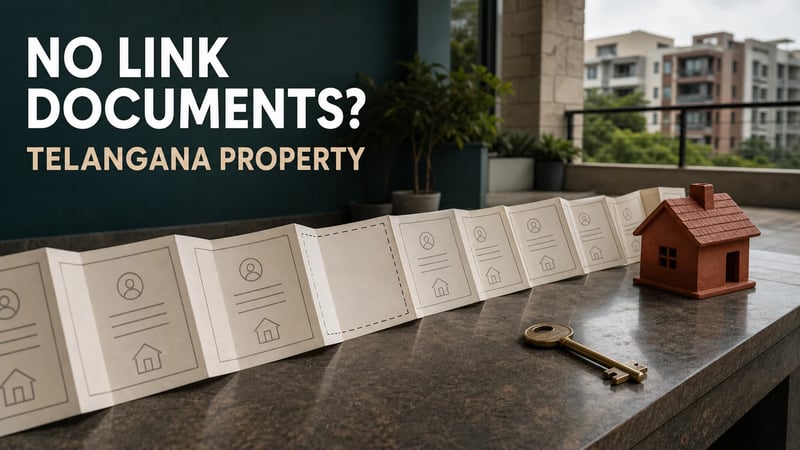
A lender may approve some Telangana properties that do not have earlier private sale deeds. It may reject or pause others because the ownership chain is incomplete.
The phrase “no link documents” is not enough to predict the result. First find out whether there was genuinely no earlier transfer, an old registered deed is missing from the folder, or an ownership step cannot be explained at all.
Key takeaways
>
– Telangana officially uses the term “sale deed and link documents” in ownership-document checklists. – No previous sale deed can be normal for a first allotment or first builder sale. – A missing physical deed may be traceable through registered-document details, EC and a certified copy. – An unexplained ownership step is different from a lost piece of paper. – The lender’s lawyer and policy decide loan acceptance; a buyer should obtain an independent title review.
You can find more borrowing basics in Paisaseed’s Loans & EMI Planning guides.
What are link documents in Telangana?
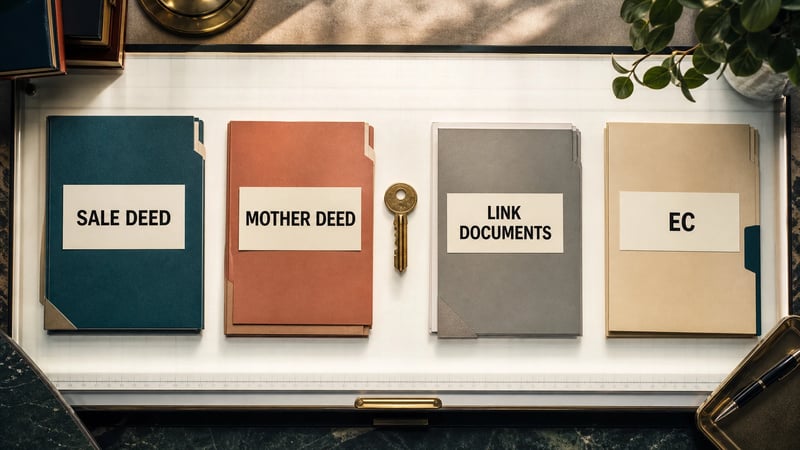
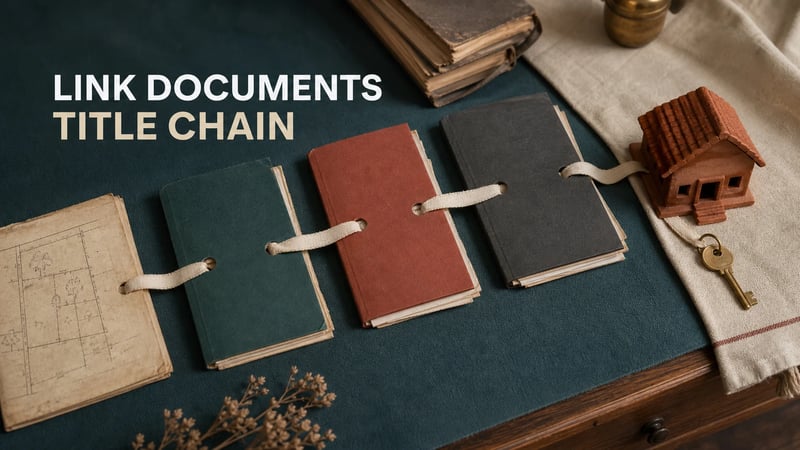
Link documents are the deeds and records connecting the property’s earlier title to the present owner.
Depending on the history, the chain may include:
- sale deeds
- gift deeds
- partition or release deeds
- allotment or conveyance records
- inheritance-related documents
- development agreement and power of attorney records
- court or authority orders affecting title
Telangana’s BuildNow checklist lists ownership documents (sale deed and link documents) for parts of its building-permission process.
That official wording confirms the local term. It does not create a rule that every home-loan lender must approve or reject the same file. BuildNow is a state building-permission system; a bank performs its own legal, technical, valuation and policy review.
First identify which no-link case you have
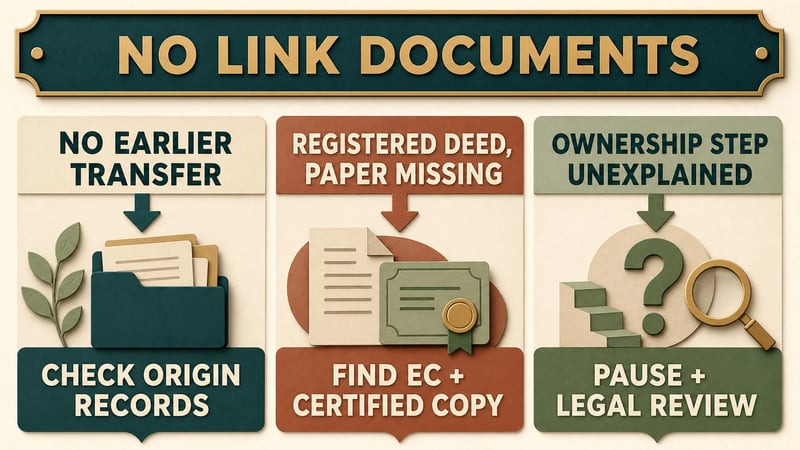
There are three broad possibilities.
Case 1: There was no earlier private transfer
Examples include:
- first allotment by a development authority
- first conveyance from a housing board
- first sale of a newly created flat by the builder
- title originating through another documented government or authority process
The file can still have a long history. A first-sale flat may require the land title, development rights and approvals even if the flat itself has no earlier sale deed.
Case 2: An earlier deed was registered, but the paper is missing
The seller may have lost the original or never collected it from an earlier transaction.
If the deed can be identified by document number, year, parties and Sub-Registrar Office, the official record may help. A certified copy can show the contents of the registered instrument.
That does not guarantee the bank will treat a certified copy exactly like an original. Ask the proposed lender in writing.
Case 3: An ownership step is unexplained
The latest deed says the seller received the property from Person B, but there is no record showing how Person B obtained it. Or a gift, partition, inheritance or development step is asserted without the supporting instrument.
This is not just a document-download task. It is a title question.
Pause payment and obtain an independent review from a qualified Telangana property lawyer.
What can Bhu Bharati help you check?
The Telangana Bhu Bharati information page currently lists services including:
- Registered Document Details
- Encumbrance Fetch (EC)
- Certified Copy of Document (CC)
- GPA-related document fetch
- prohibited survey-number information
Use the official service as a record-retrieval route, not as a final title certificate.
Portal names, login requirements, fees and steps can change. Start from the official Bhu Bharati information page rather than an advertisement or lookalike site.
If the document is not available online, ask the relevant Sub-Registrar Office about the current certified-copy process.
Ask what the bank means by “link documents pending”
The lender’s message may be shorter than the actual legal query. Ask whether it needs:
- an earlier registered deed
- the original rather than an ordinary copy
- a certified copy from the registration record
- an authority allotment or conveyance
- the landowner’s chain for a builder flat
- a corrected property description
- a longer EC or another search
These are different requests. Sending another copy of the latest sale deed will not answer all of them.
Also ask whether the property is rejected or only pending clarification. If it is pending, request the exact document name, date or title step that the legal team wants reviewed. This gives the seller a specific task and gives your independent lawyer a specific question.
Use the EC to find clues, not to declare the property safe
An EC can help identify registered transactions or charges returned for the property details and period searched.
Look for:
- an older sale or gift document number
- a mortgage entry
- a release or cancellation entry
- names that do not match the seller’s chain
- a document shown in the EC but absent from the file
Check that the search used the correct property particulars. A wrong survey number, subdivision, flat number or period can produce an incomplete result.
A result described as clear does not automatically mean:
- every old deed is available
- every family or succession question is resolved
- the building has all approvals
- the current seller has a marketable title
- the bank will approve the mortgage
An EC is one part of due diligence.
Build a Telangana title-chain table
Create one row for each ownership event.
| Date | Document type | Document no. and year | From | To | SRO | Paper status |
|---|---|---|---|---|---|---|
| Add date | Add document type | Add number and year | Add previous owner | Add next owner | Add SRO | Original / Certified copy / Missing |
| Add date | Add document type | Add number and year | Add previous owner | Add next owner | Add SRO | Original / Certified copy / Missing |
| Add date | Add document type | Add number and year | Add previous owner | Add next owner | Add SRO | Original / Certified copy / Missing |
Then compare:
- survey and subdivision number
- plot or flat number
- extent and boundaries
- undivided share of land
- owner names and initials
- document references written inside later deeds
- entries shown in the EC
One mismatch may have an explanation. Several unexplained mismatches should slow the transaction down.
What documents might support a first-title property?
If no prior sale deed exists, ask what legally and factually created the seller’s title.
| Property origin | Records that may be relevant |
|---|---|
| Authority allotment | Allotment, possession, lease-cum-sale or conveyance, transfer compliance |
| Builder’s first flat sale | Land chain, development agreement, sanctioned plan, buyer agreement, occupancy or completion records where applicable |
| Gift | Donor’s title and registered gift deed |
| Inheritance | Deceased owner’s title and succession records applicable to that family and property |
| Partition | Earlier common title and partition instrument or order |
These examples are not a universal checklist. A local lawyer must identify what should exist for the exact property.
What will the home-loan lender check?
The lender may examine whether:
- the title chain is documentable
- the seller has authority to transfer
- all required owners or heirs are included
- the property description is consistent
- existing mortgages or charges are addressed
- statutory approvals are available
- the property matches the sanctioned plan
- the value and property type fit lending policy
- the lender can create its required mortgage
A lender’s public checklist can ask for title deeds including the previous chain in a resale case. It can request more documents after the legal or technical team reviews the property.
Strong income does not cure a property gap. Paisaseed’s loan-eligibility calculator can estimate repayment capacity, but the property still needs its own clearance.
Can a certified copy solve the missing-link problem?
Sometimes it can help. It does not solve every case.
A certified copy may be useful when:
- the deed was registered
- the document can be identified accurately
- the official record is available
- the copy connects a known ownership step
- the lender and lawyer accept it for their purposes
It may not solve the problem when:
- no supporting transaction can be identified
- names or property particulars materially conflict
- an original is required for a specific mortgage or handover process
- the issue involves an unaccounted owner, heir or authority
- the property itself has approval or plan problems
Do not spend money on random affidavits before the lender and independent lawyer explain what the actual gap is.
A safe sequence before paying the seller
- Ask the seller for the latest deed and every earlier title record.
- Write the claimed ownership story in date order.
- Check registered-document details and the EC on the official Telangana route.
- Identify any missing registered deed and request a certified copy where available.
- Compare names, survey numbers, area and boundaries.
- Share the complete file with the proposed lender.
- Ask what remains pending in legal and technical verification.
- Obtain an independent Telangana property-law review.
- Put document and refund conditions into a reviewed written agreement before a large token.
Do not treat another buyer’s loan approval or a broker’s “bank-approved property” statement as a substitute for your file.
Bottom line
A Telangana property without earlier sale deeds is not automatically unfinanceable. The absence may be normal if the title began through a documented first allotment, first builder sale, gift, partition or inheritance.
But if an older ownership step is missing, the bank may pause or reject the file until the gap is understood. Use Bhu Bharati’s official document, EC and certified-copy routes to gather records, then let the proposed lender and an independent qualified local property lawyer review the actual chain.
This article is educational and not legal, lending or property-purchase advice. Telangana portals, registration processes, required documents and lender policies can change. Verify current official records and obtain advice from a qualified Telangana property lawyer and proposed lender.
FAQs
Are link documents mandatory for every Telangana home loan?
The exact file depends on how the property title began and the lender’s policy. A resale lender may request the previous title chain, while a genuine first transfer may rely on allotment, land-title or development records instead of earlier flat sale deeds.
Can I get old link documents online in Telangana?
The official Bhu Bharati page lists registered-document details, EC and certified-copy services. Availability depends on the record. Use the official portal or ask the relevant Sub-Registrar Office for the current process.
Is a certified copy equal to the lost original for a bank?
Do not assume so. A certified copy can prove the registered document’s contents, but the lender and reviewing lawyer decide whether it satisfies the specific title and mortgage requirement.
Can a clear Telangana EC replace link documents?
No. The EC and title instruments perform different jobs. A clear result does not recreate missing deeds or validate every ownership and approval issue.
Should I apply to another bank if one lender rejects the property?
First understand the documented reason. A second lender may follow a different policy, but changing banks does not repair a genuine title or approval problem.