The seller has shared a sale deed, an EC and a few tax receipts. The bank asks for “the complete property file.” What is still missing?
For a resale home loan, a lender usually checks you and the property separately. Your salary, bank statements and credit history support your repayment eligibility. The sale deed, ownership chain, approvals and dues help the lender decide whether it can accept that property as security.
Key takeaways
>
– The latest sale deed alone may not show the full ownership history. – Keep borrower documents and property documents in separate folders. – Resale files commonly include the title chain, agreement to sell, EC, tax receipts and building or society papers. – A clear bank process does not replace an independent title review for the buyer. – Collect and review documents before paying a large token amount.
You can also browse Paisaseed’s Loans & EMI Planning guides while preparing the financing side.
First separate your documents from the property’s documents
A home-loan checklist often mixes two very different files.
| File | What it contains | What it helps assess |
|---|---|---|
| Borrower file | KYC, salary slips, bank statements, Form 16 or ITRs, existing-loan details | Whether you can repay |
| Property file | Title deeds, ownership chain, agreement, EC, approvals, tax and society records | Whether the property can be financed and mortgaged |
Getting a sanction based on income does not mean the property has cleared the lender’s legal and technical checks. A sanction letter may still carry conditions that must be met before disbursement.
That difference catches many first-time buyers. They hear “loan approved” and assume the flat is approved too.
Ask the lender which stage has actually finished: credit, legal, technical, valuation or disbursement.
Build five folders, not one loose stack
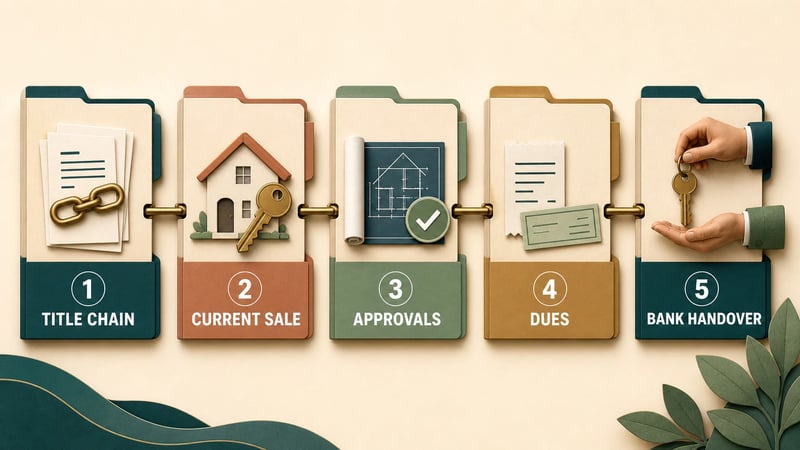
A practical resale-property file is easier to check when it is divided by purpose.
1. Ownership and title-chain folder
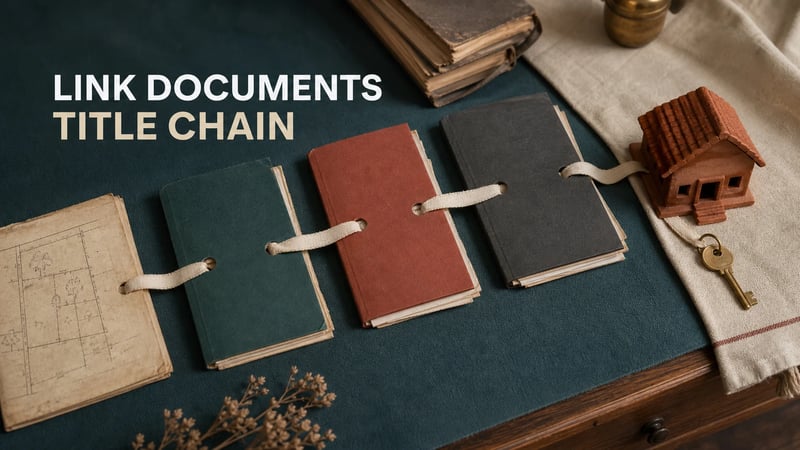
Start with the document showing how the current seller obtained the property. This may be a sale deed, gift deed, partition deed, release deed, conveyance deed, allotment document or another title document, depending on the property’s history.
Then collect the earlier documents that connect the seller’s title to previous owners or to the property’s original allotment or development.
Banks may call this the previous chain, link documents, parent documents or title deeds. The wording changes by state and lender. The job is the same: show an unbroken and explainable ownership path.
For a Telangana property, “link documents” is not just broker language. The state’s BuildNow checklist itself uses sale deed and link documents under ownership documents.
2. Present transaction folder
This folder records the deal you are making now.
Keep:
- the draft or signed agreement to sell
- receipts for the token or initial payment
- the seller’s agreed payment schedule
- the lender’s document request list
- the proposed sale-deed draft when available
- written details of any existing loan on the property
Do not rely on a chat message saying the token is refundable. Payment terms, document conditions and refund rights belong in a properly reviewed written agreement.
3. Building and approval folder
The required approvals depend on whether you are buying an apartment, independent house, plot or property under a development authority.
The file may include:
- sanctioned building plan
- layout approval
- occupancy certificate, where applicable
- completion certificate, where applicable
- allotment and possession documents
- association or society registration papers
- development agreement or power of attorney in a builder transaction
- conversion or land-use records where relevant
Do not collect names blindly. Ask your lawyer and lender which approvals should exist for that property type, location and age.
An old independent house will not have the same file as a newly completed apartment. Missing and “not applicable” are not the same thing.
4. Dues and possession folder
This folder helps you check whether the seller has kept the running property records in order.
Common papers include:
- latest property-tax receipt
- water and electricity dues evidence
- society or apartment-association no-dues letter
- maintenance payment record
- share certificate, where a co-operative society uses one
- possession or occupancy-related record where relevant
A no-dues letter is not a title deed. It answers a narrower question about amounts or records maintained by that body.
5. Bank handover folder
The last folder tracks what the lender receives and what must happen before disbursement.
Keep copies of:
- legal and technical document requests
- sanction letter and special conditions
- valuation-related communication
- originals handed to the lender
- the lender’s written acknowledgement or list of originals
- disbursement instructions
Never hand over a pile of originals without a detailed acknowledgement. Record the document name, date, number and number of pages where possible.
The core resale-home checklist
Use this as a working list, not a promise that every lender will ask for the same papers.
| Document group | Examples | Main question it helps answer |
|---|---|---|
| Current ownership | Seller’s registered title deed | How did the seller obtain the property? |
| Previous chain | Earlier sale, gift, partition, release, conveyance or allotment documents | Does the ownership path connect? |
| Encumbrance search | Current EC for the requested property and period | What registered transactions or charges appear in the search? |
| Present sale | Agreement to sell and payment receipts | What have buyer and seller agreed? |
| Identity and authority | Seller KYC, co-owner details, POA where used | Who is signing and with what authority? |
| Municipal and planning | Approved plan, layout, OC or CC where applicable | Was the property developed under the relevant approvals? |
| Tax and dues | Property-tax and society or utility dues records | Are routine property dues addressed? |
| Existing mortgage | Loan statement, foreclosure letter and lender document list | Is another lender holding the originals or a charge? |
The lender can ask for additional papers after its lawyer or technical valuer studies the property. Treat the first checklist as a starting point.
Sale deed, link documents and EC do different jobs
These three are often treated as substitutes. They are not.
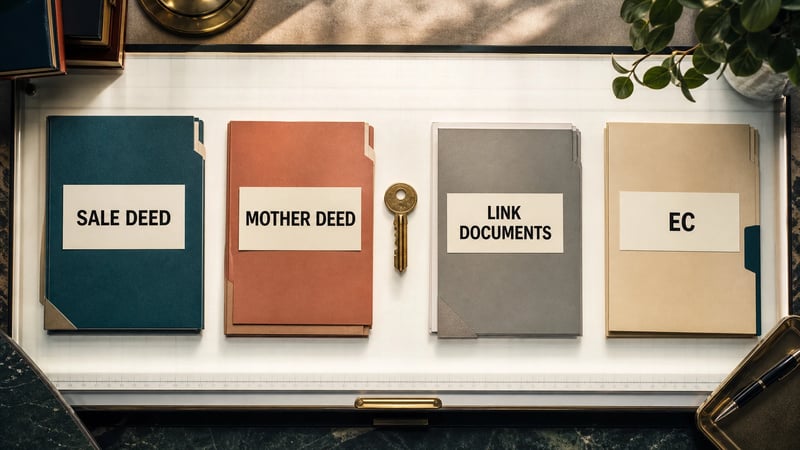
The current sale deed shows a transfer involving the present owner. The link documents help connect that transfer to the earlier ownership history. The encumbrance certificate reports registered transactions returned for the property details and period searched.
One document does not automatically repair a gap in another.
For example, a clean EC does not create a missing sale deed. A photocopy of an old deed does not prove that every later transfer was recorded correctly. And the latest sale deed does not, by itself, explain how the seller’s seller obtained the property.
The correct question is not “Which one paper is enough?” It is “Do these records tell one consistent story?”
Check names, numbers and property descriptions line by line
Many document problems are not dramatic. They begin with a mismatch.
Compare:
- owner names and initials
- flat, plot or house number
- survey number and subdivision
- extent or area
- boundaries
- undivided share of land for an apartment
- document number, year and Sub-Registrar Office
- building, society and municipal description
Do not silently correct a spelling or survey mismatch in your head. Mark it and ask how it will be resolved in the official record.
The same applies to co-owners. If the property belongs to more than one person, the lender and lawyer need to check who must sign and who must join the loan or mortgage documentation.
What to do before paying the token
The safest order is boring, but useful.
- Ask for a soft-copy document index from the seller.
- Match each file to the index.
- Check the current registered document and earlier chain.
- Obtain or review the EC for the right property details and period.
- Ask the lender for its property-document list.
- Get an independent local property lawyer to review title and transaction terms.
- Record any missing paper and who will supply it.
- Put payment, document and refund conditions into a reviewed written agreement.
Imagine a buyer agreeing to a Rs 5 lakh token on a Rs 75 lakh resale flat. The seller later reveals that an earlier original deed is unavailable and the bank will not clear the file yet.
The problem is no longer only the missing deed. It is also the money already committed and the wording of the agreement.
Documents first. Large payment later.
What happens during the bank’s legal and technical checks
The lender’s legal team studies the title and property papers to decide whether its mortgage can be created under its policy. The technical team may inspect the property, compare it with sanctioned plans, review construction status and estimate value.
Either side can raise conditions.
| Review | Possible query |
|---|---|
| Legal | Missing chain deed, ownership mismatch, unresolved mortgage, incomplete approval |
| Technical | Plan deviation, unclear area, incomplete construction, valuation below the transaction price |
This is why a borrower with strong income and a good credit profile can still face a property-side delay or rejection.
Use Paisaseed’s loan-eligibility calculator for a repayment-capacity estimate, but keep it separate from the property’s approval. A calculator cannot assess title.
Originals held by the seller’s bank need a separate plan
A resale property may already have a home loan. In that case, the seller may not physically hold the original title documents because their lender holds them as security.
Ask for:
- the recent loan statement
- foreclosure or closure amount
- the seller-lender’s list of original documents
- the proposed payment and release process
- the no-dues or closure document after repayment
- the mechanism for transferring originals to your lender or authorised party
Do not route a large closure payment casually to the seller when the transaction involves another lender. Get both lenders and the reviewed sale agreement aligned on the sequence.
Budget after the property file starts clearing
Legal clearance does not tell you whether the EMI is comfortable.
Use the home-loan EMI calculator to test the instalment at different rates and tenures. If you expect future lump-sum repayments, the home-loan prepayment calculator can show how the loan schedule may change.
Keep registration costs, legal review, repairs, moving expenses and emergency cash outside the down-payment number. A technically affordable loan can still leave the household with no buffer.
Bottom line
A resale home-loan file is more than one sale deed and one EC. It should explain ownership, the present deal, applicable approvals, dues and the handover of originals.
Start with a document index. Check every mismatch. Confirm which lender stage has cleared. And use an independent qualified property lawyer for your own title and agreement review before committing serious money.
This article is educational and does not provide legal, lending or property-purchase advice. Property records, required approvals, title documents and lender policies differ by state, property type and transaction. Verify the current official records and obtain advice from a qualified local property lawyer and your proposed lender.
FAQs
Is the latest sale deed enough for a resale home loan?
Not always. A lender may ask for earlier title or link documents, an EC, the agreement to sell, payment receipts, approvals and other property-specific records. The required chain depends on the property history and lender policy.
Does a clear EC mean the property documents are complete?
No. An EC and the title documents perform different checks. A clear EC does not automatically supply a missing deed, validate every approval or replace a legal title review.
Should the seller give original documents before the home loan?
The buyer should inspect the document position and the lender will state which originals are needed for disbursement. If the seller has an existing loan, the original papers may be with that lender and require a coordinated release process.
Can a bank ask for documents not on its website checklist?
Yes. Public checklists are usually indicative. The bank’s legal, technical, valuation and policy review can lead to additional document requests.
Is bank legal verification enough for the buyer?
It is the bank’s assessment for lending and mortgage purposes. A buyer should consider an independent property lawyer who is responsible for reviewing the buyer’s title and transaction concerns.